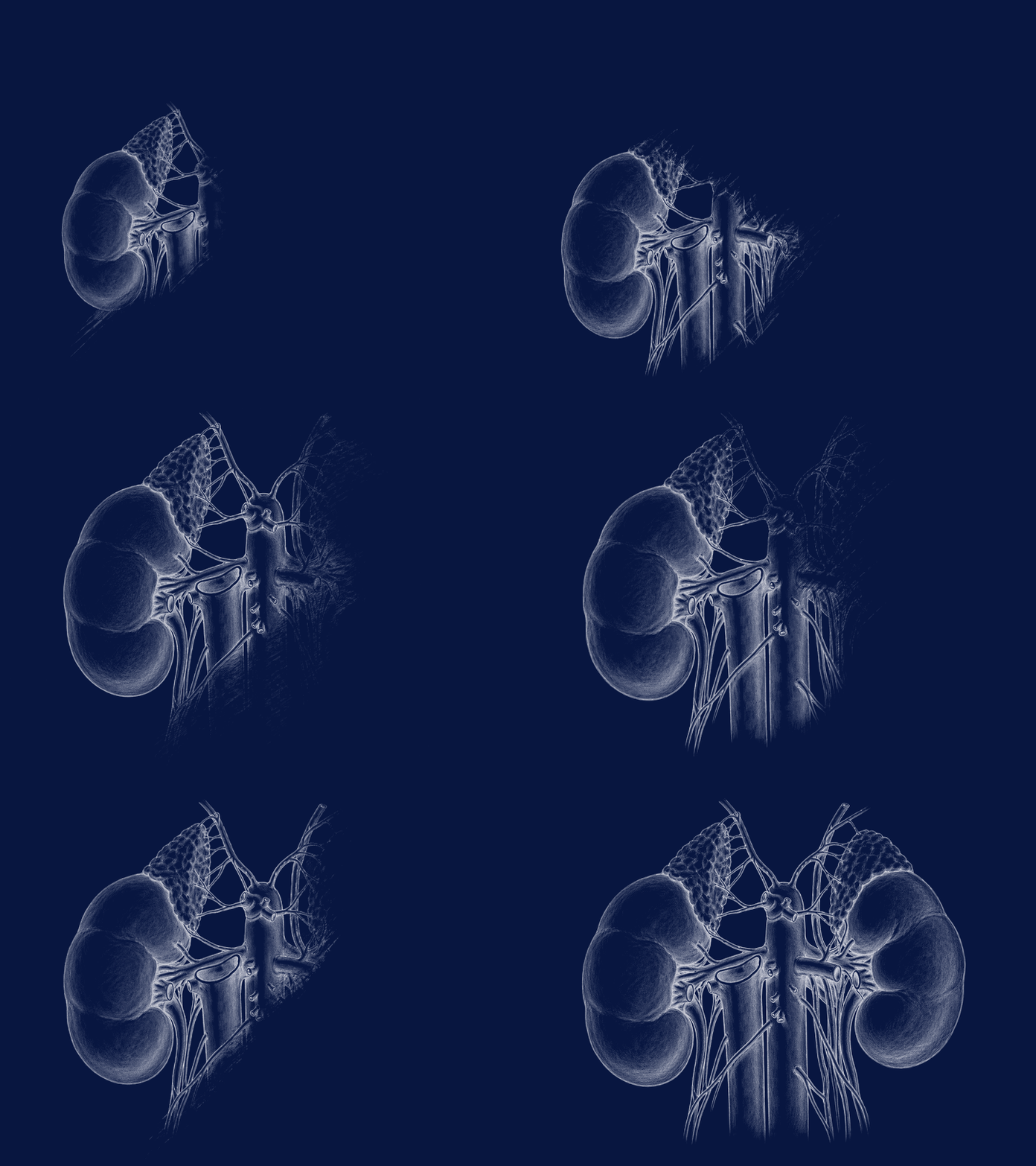
Laparoscopic Surgery
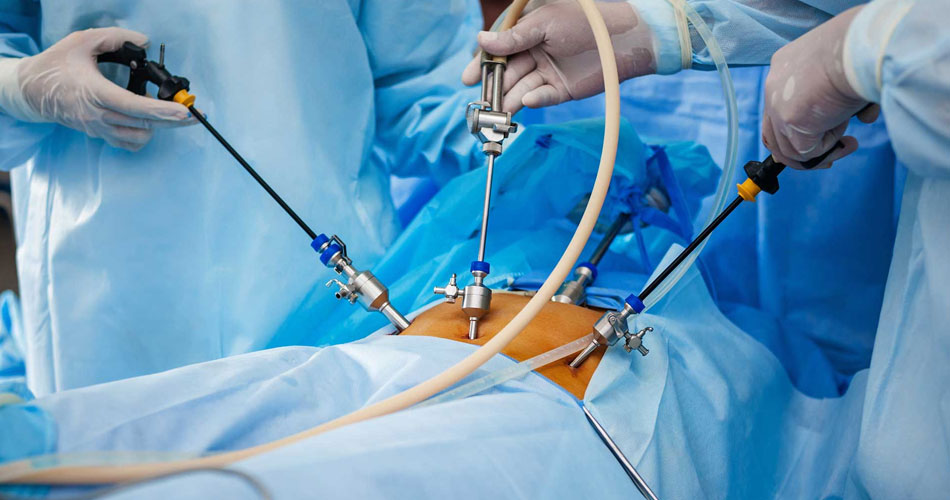
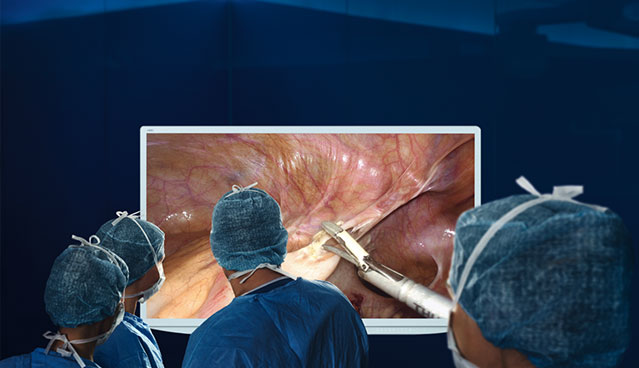
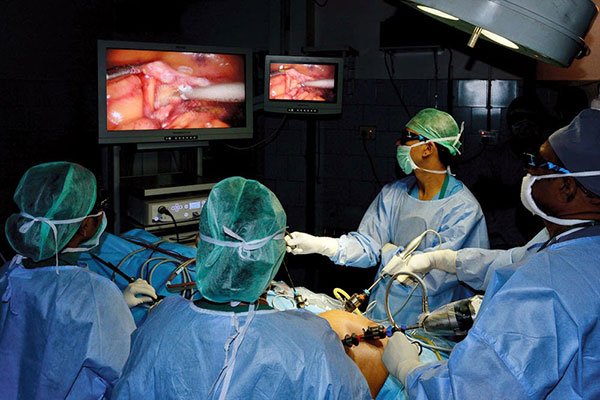
Laparoscopic operations are minimally invasive surgical interventions performed through several small punctures (5–10 mm) in the abdominal wall using special instruments and a video camera (laparoscope). The image of internal organs is transmitted to a monitor, allowing the surgeon to perform the operation without a large incision.
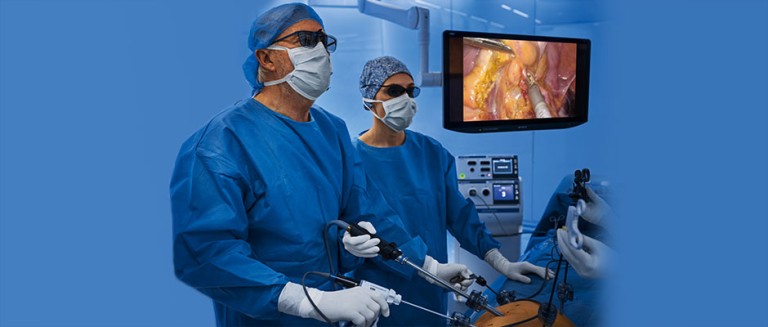
Advantages of laparoscopic operations over open ones:
- -1. Less traumatic — instead of a large incision - small punctures.
- -2. Less blood loss.
- -3. Less postoperative pain.
- -4. Faster recovery and shorter hospital stay.
- -5. Better cosmetic effect (small scars).
- -6. Lower risk of postoperative complications (infections, adhesions, hernias).
- -7. More precise visualization of organs — thanks to image magnification on screen.
Laparoscopic operations in urology:
Urology is one of the most active fields in the use of laparoscopy.
Laparoscopic urological surgery is a minimally invasive method of treating pathologies of the kidneys, adrenal glands, ureters, bladder and prostate, which ensures high precision, minimal invasiveness and rapid recovery.
Here is a complete list of main laparoscopic interventions in modern urological practice:
1. On the kidneys:
Laparoscopic nephrectomy — kidney removal.
Essence: complete removal of the kidney along with surrounding adipose tissue.
Indications: kidney cancer (T1–T2), nephrosclerosis, purulent-destructive pyelonephritis, kidney atrophy.
Procedure: through 3–4 punctures in the abdominal wall, the kidney is isolated, vessels are clipped, ureter is cut, and the organ is removed in a special container.
Advantages: less blood loss, short hospitalization (3–5 days), rapid recovery.
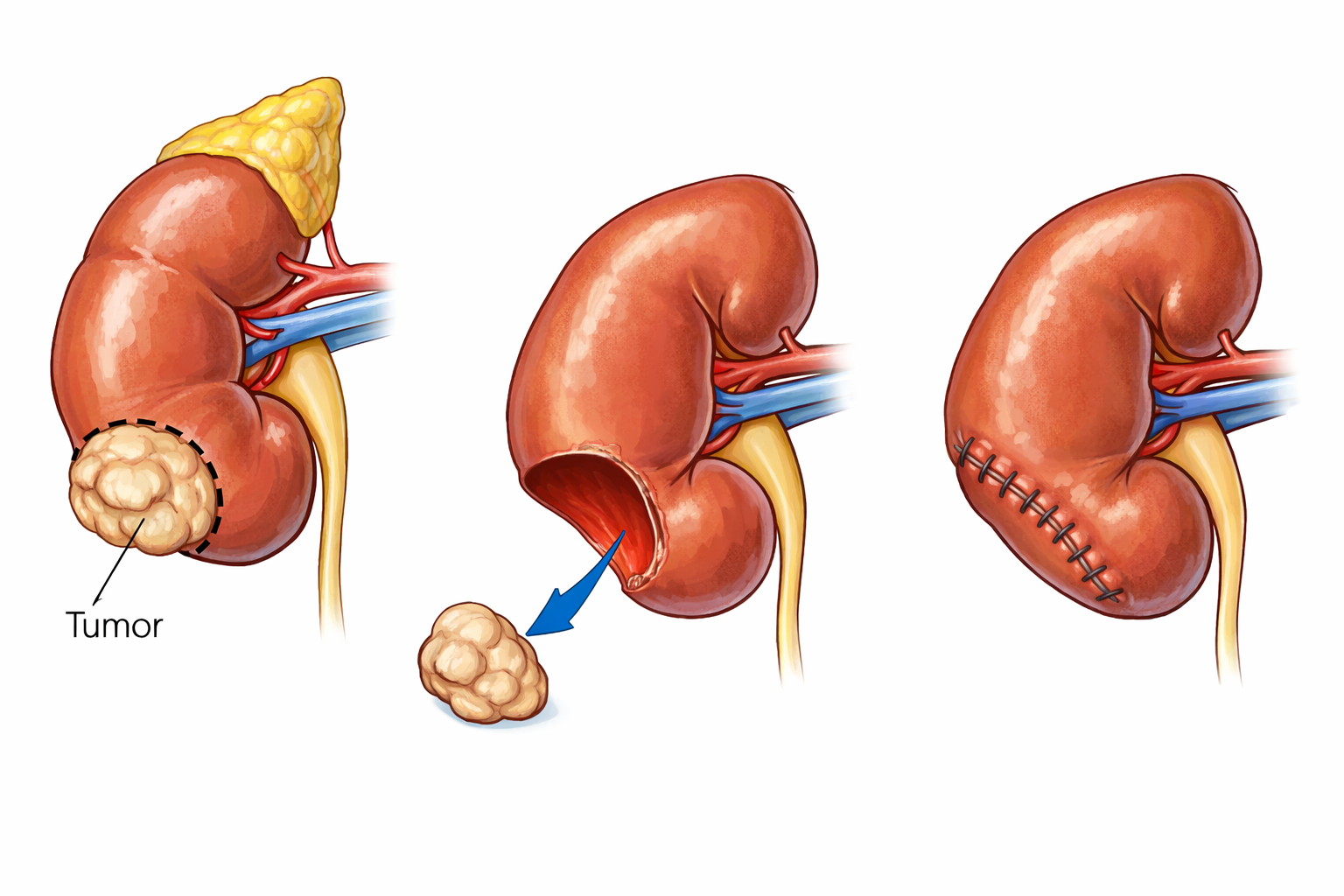
Laparoscopic partial nephrectomy (kidney resection) — tumor removal with organ preservation.
Essence: removal of only the kidney tumor with part of the parenchyma, preservation of the rest of the organ.
Indications: tumors up to 4 cm (T1a), solitary kidney, bilateral tumors.
Procedure: temporary clamping of kidney vessels, tumor excision, parenchyma suturing.
Advantages: preservation of kidney function, minimal invasiveness.
Laparoscopic nephroureterectomy — removal of kidney together with ureter (for cancer of the pelvic-ureteral segment).
Essence: removal of kidney together with ureter and part of bladder wall.
Indications: transitional cell carcinoma of pelvic-ureteral segment.
Feature: requires careful work near the bladder, often combined with laparoscopic cystectomy.
Laparoscopic pyeloplasty — reconstruction of pelvic-ureteral segment in stenosis.
Essence: reconstruction of pelvic-ureteral segment in stenosis.
Indications: congenital or acquired stenosis (hydronephrosis).
Procedure: narrowed area is removed, new connection between pelvis and ureter (anastomosis) is formed, stent is placed.
Advantages: high success rate (over 90%), minimal scarring.
Laparoscopic nephropexy — fixation of prolapsed kidney.
Essence: fixation of mobile (prolapsed) kidney to lumbar fascia or muscles.
Indications: nephroptosis (kidney prolapse) with pain syndrome.
Procedure: kidney is mobilized and sutured to fixing structures.
Advantages: rapid recovery, effective pain relief.
Laparoscopic kidney cystectomy — excision or treatment of cyst.
Essence: excision of cyst wall and drainage of its cavity.
Indications: symptomatic cyst larger than 5 cm, infected cyst.
Procedure: through punctures, cyst is opened, wall is removed, residual surface is coagulated.
Advantages: short operation, low recurrence risk.
Laparoscopic nephrectomy — kidney removal.
Essence: complete removal of the kidney along with surrounding adipose tissue.
Indications: kidney cancer (T1–T2), nephrosclerosis, purulent-destructive pyelonephritis, kidney atrophy.
Procedure: through 3–4 punctures in the abdominal wall, the kidney is isolated, vessels are clipped, ureter is cut, and the organ is removed in a special container.
Advantages: less blood loss, short hospitalization (3–5 days), rapid recovery.
Laparoscopic partial nephrectomy (kidney resection) — tumor removal with organ preservation.
Essence: removal of only the kidney tumor with part of the parenchyma, preservation of the rest of the organ.
Indications: tumors up to 4 cm (T1a), solitary kidney, bilateral tumors.
Procedure: temporary clamping of kidney vessels, tumor excision, parenchyma suturing.
Advantages: preservation of kidney function, minimal invasiveness.
Laparoscopic nephroureterectomy — removal of kidney together with ureter (for cancer of the pelvic-ureteral segment).
Essence: removal of kidney together with ureter and part of bladder wall.
Indications: transitional cell carcinoma of pelvic-ureteral segment.
Feature: requires careful work near the bladder, often combined with laparoscopic cystectomy.
Laparoscopic pyeloplasty — reconstruction of pelvic-ureteral segment in stenosis.
Essence: reconstruction of pelvic-ureteral segment in stenosis.
Indications: congenital or acquired stenosis (hydronephrosis).
Procedure: narrowed area is removed, new connection between pelvis and ureter (anastomosis) is formed, stent is placed.
Advantages: high success rate (over 90%), minimal scarring.
Laparoscopic nephropexy — fixation of prolapsed kidney.
Essence: fixation of mobile (prolapsed) kidney to lumbar fascia or muscles.
Indications: nephroptosis (kidney prolapse) with pain syndrome.
Procedure: kidney is mobilized and sutured to fixing structures.
Advantages: rapid recovery, effective pain relief.
Laparoscopic kidney cystectomy — excision or treatment of cyst.
Essence: excision of cyst wall and drainage of its cavity.
Indications: symptomatic cyst larger than 5 cm, infected cyst.
Procedure: through punctures, cyst is opened, wall is removed, residual surface is coagulated.
Advantages: short operation, low recurrence risk.
2. On the adrenal glands:
Laparoscopic adrenalectomy — removal of one or both adrenal glands (for adenomas, pheochromocytoma, corticosteroma, etc.).
Essence: removal of one or both adrenal glands.
Indications: hormonally active tumors (pheochromocytoma, corticosteroma, aldosteroma), non-functioning adenomas >4 cm.
Procedure: through 3–4 punctures, adrenal gland is isolated, vessels are clipped, organ is removed.
Advantages: minimal bleeding risk, rapid restoration of hormonal balance.
Laparoscopic adrenalectomy — removal of one or both adrenal glands (for adenomas, pheochromocytoma, corticosteroma, etc.).
Essence: removal of one or both adrenal glands.
Indications: hormonally active tumors (pheochromocytoma, corticosteroma, aldosteroma), non-functioning adenomas >4 cm.
Procedure: through 3–4 punctures, adrenal gland is isolated, vessels are clipped, organ is removed.
Advantages: minimal bleeding risk, rapid restoration of hormonal balance.
3. On the ureters:
Laparoscopic ureterolysis — release of ureter from fibrous or adhesive fusions.
Essence: release of ureter from adhesions, fibrosis, or vascular compression.
Indications: secondary ureteral strictures, retroperitoneal fibrosis (Ormond's syndrome).
Advantages: restoration of urine passage without open access.
Laparoscopic ureteroneoanastomosis — ureter reconstruction after damage or stricture.
Essence: removal of damaged part of ureter and creation of new connection between its ends.
Indications: trauma, tumors, scar narrowing.
Advantages: restoration of ureter integrity, organ preservation.
Ureter reimplantation into bladder — ureterocystoanastomosis (laparoscopic technique).
Essence: transplantation of distal ureter end to new location on bladder wall.
Indications: reflux, damage during gynecological or oncological operations.
Advantages: restoration of urine outflow, hydronephrosis prevention.
Laparoscopic ureterolysis — release of ureter from fibrous or adhesive fusions.
Essence: release of ureter from adhesions, fibrosis, or vascular compression.
Indications: secondary ureteral strictures, retroperitoneal fibrosis (Ormond's syndrome).
Advantages: restoration of urine passage without open access.
Laparoscopic ureteroneoanastomosis — ureter reconstruction after damage or stricture.
Essence: removal of damaged part of ureter and creation of new connection between its ends.
Indications: trauma, tumors, scar narrowing.
Advantages: restoration of ureter integrity, organ preservation.
Ureter reimplantation into bladder — ureterocystoanastomosis (laparoscopic technique).
Essence: transplantation of distal ureter end to new location on bladder wall.
Indications: reflux, damage during gynecological or oncological operations.
Advantages: restoration of urine outflow, hydronephrosis prevention.
4. On the bladder:
Laparoscopic cystectomy — bladder removal (complete or partial).
Essence: complete or partial bladder removal for cancer.
Indications: invasive bladder cancer, multiple tumors.
Options:
Radical: bladder, prostate (in men) or uterus (in women), lymph nodes are removed.
Partial: for localized tumors.
Advantages: fewer complications, possibility of neobladder creation.
Laparoscopic bladder reconstruction (neocystis creation from intestine).
Essence: creation of new bladder from intestinal fragment.
Indications: after radical cystectomy.
Advantages: patient retains natural urination, no external bag.
Laparoscopic removal of bladder diverticula.
Essence: excision of bladder wall protrusions.
Indications: large diverticula, urine stasis, infections.
Advantages: restoration of normal urine drainage.
Laparoscopic cystectomy — bladder removal (complete or partial).
Essence: complete or partial bladder removal for cancer.
Indications: invasive bladder cancer, multiple tumors.
Options:
Radical: bladder, prostate (in men) or uterus (in women), lymph nodes are removed.
Partial: for localized tumors.
Advantages: fewer complications, possibility of neobladder creation.
Laparoscopic bladder reconstruction (neocystis creation from intestine).
Essence: creation of new bladder from intestinal fragment.
Indications: after radical cystectomy.
Advantages: patient retains natural urination, no external bag.
Laparoscopic removal of bladder diverticula.
Essence: excision of bladder wall protrusions.
Indications: large diverticula, urine stasis, infections.
Advantages: restoration of normal urine drainage.
5. On the prostate:
Laparoscopic radical prostatectomy — prostate removal for most prostate cancers.
Essence: complete removal of prostate along with seminal vesicles.
Indications: prostate cancer stage T1–T2.
Procedure: preservation of neurovascular bundles when possible.
Advantages: less blood loss, urinary control is preserved.
Laparoscopic adenomectomy — prostate adenoma removal for benign hyperplasia (alternative to open).
Essence: removal of hyperplastic tissue for large prostate adenoma (>80 ml).
Indications: benign prostatic hyperplasia (BPH).
Advantages: alternative to open prostatectomy, fewer complications.
Laparoscopic radical prostatectomy — prostate removal for most prostate cancers.
Essence: complete removal of prostate along with seminal vesicles.
Indications: prostate cancer stage T1–T2.
Procedure: preservation of neurovascular bundles when possible.
Advantages: less blood loss, urinary control is preserved.
Laparoscopic adenomectomy — prostate adenoma removal for benign hyperplasia (alternative to open).
Essence: removal of hyperplastic tissue for large prostate adenoma (>80 ml).
Indications: benign prostatic hyperplasia (BPH).
Advantages: alternative to open prostatectomy, fewer complications.
6. Other laparoscopic urological interventions:
Laparoscopic lymphadenectomy — lymph node removal (for oncological diseases).
Essence: removal of pelvic or retroperitoneal lymph nodes.
Indications: staging or treatment of kidney, prostate, testicular cancer.
Laparoscopic vascular transposition for compression syndromes — (e.g., nutcracker syndrome).
Essence: repositioning of vessels compressing the ureter (nutcracker syndrome, May-Thurner syndrome).
Indications: compression syndromes.
Advantages: restoration of normal blood or urine outflow.
Laparoscopic varicocelectomy (transperitoneal) — varicocele treatment (less common, more often performed microsurgically).
Essence: ligation of internal testicular veins.
Indications: varicocele, infertility, scrotal pain.
Advantages: short operation, fertility restoration.
Laparoscopic lymphadenectomy — lymph node removal (for oncological diseases).
Essence: removal of pelvic or retroperitoneal lymph nodes.
Indications: staging or treatment of kidney, prostate, testicular cancer.
Laparoscopic vascular transposition for compression syndromes — (e.g., nutcracker syndrome).
Essence: repositioning of vessels compressing the ureter (nutcracker syndrome, May-Thurner syndrome).
Indications: compression syndromes.
Advantages: restoration of normal blood or urine outflow.
Laparoscopic varicocelectomy (transperitoneal) — varicocele treatment (less common, more often performed microsurgically).
Essence: ligation of internal testicular veins.
Indications: varicocele, infertility, scrotal pain.
Advantages: short operation, fertility restoration.
Laparoscopic ligation of internal iliac vessels for bleeding or oncological operations.
- ✓Less traumatic
- ✓Faster recovery
- ✓Less pain syndrome
- ✓Better cosmetic effect