Urolithiasis Treatment
Urolithiasis is one of the most common urological diseases, arising from the formation of stones (calculi) in the kidneys, ureters, or bladder.
Diagnostics:
For accurate diagnosis, we use:
- -Ultrasound examination (US) of the urinary system organs
- -Computed tomography (CT) of kidneys and ureters
- -Laboratory analysis of urine, blood
- -X-ray examination (when indicated)
- -Radiological examination methods
- -Angiography
Diagnostics allows determining the size, location, and composition of the stone, which is crucial for choosing the optimal treatment approach.
Treatment:
Our department performs:
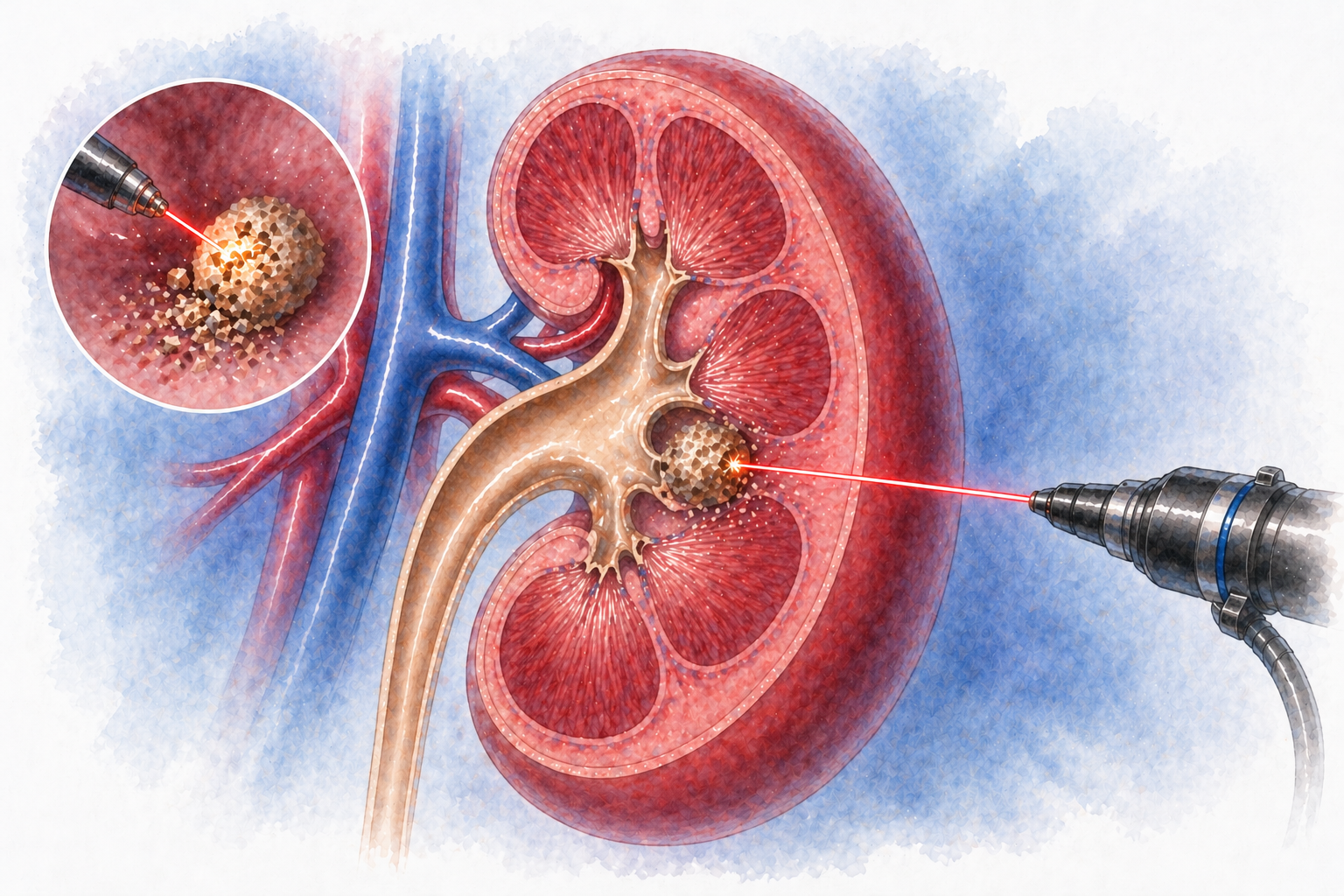
Contact ureterolithotripsy and nephrolithotripsy
endoscopic stone fragmentation and removal through natural pathways
Percutaneous nephrolithotomy (PCNL)
minimally invasive removal of large or complex stones through a small incision in the lower back
Laparoscopic and open operations
in complex or recurrent cases
Extracorporeal Shock Wave Lithotripsy (ESWL)
non-surgical stone fragmentation using ultrasound waves


Prevention:
- -rational nutrition for those prone to stone formation,
- -optimal drinking regimen,
- -control of salt levels and metabolism.