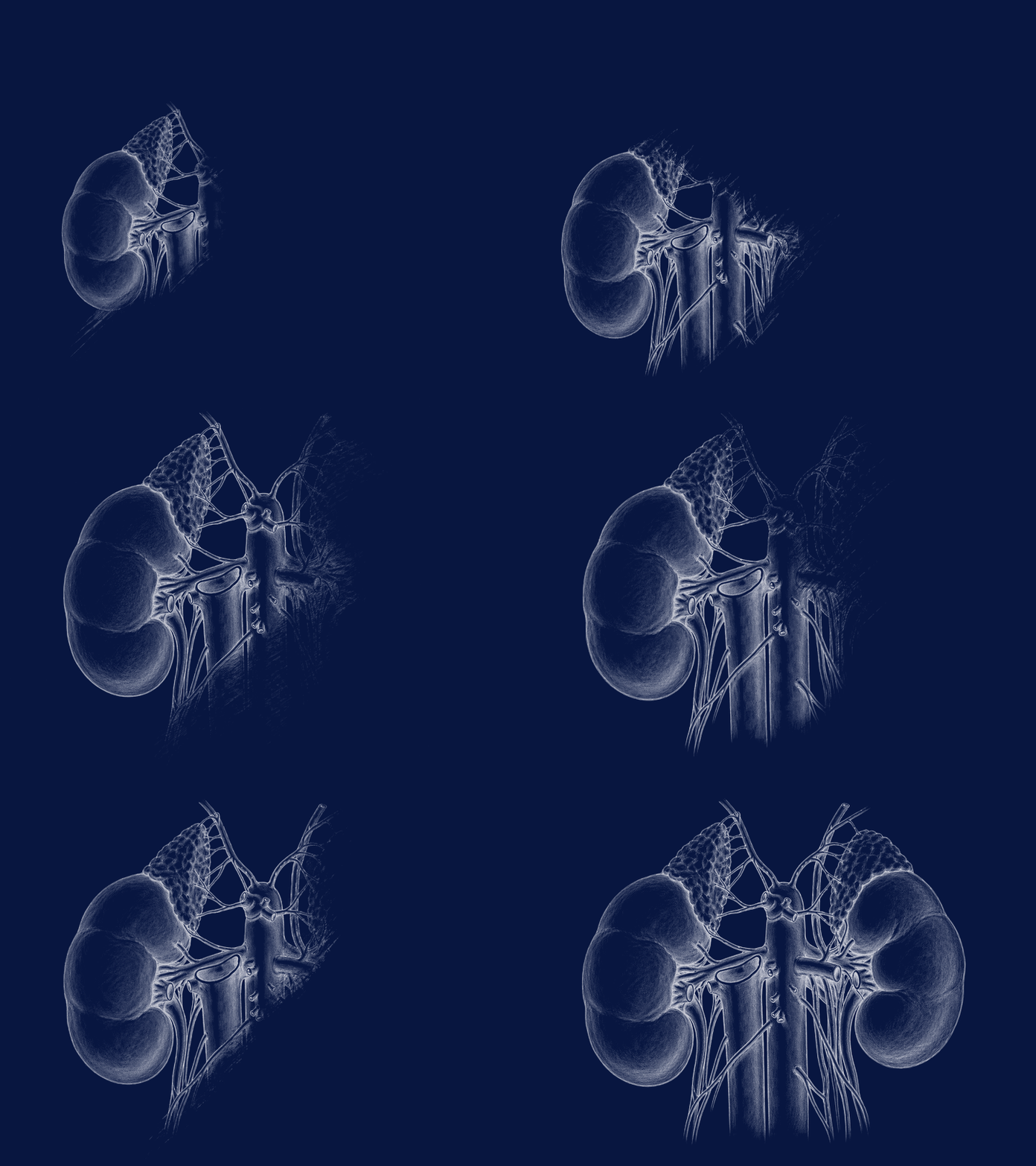
Endovascular Surgery
Endovascular surgery in urology is a highly specialized method where urological diseases are treated through blood vessels using catheters under X-ray guidance.
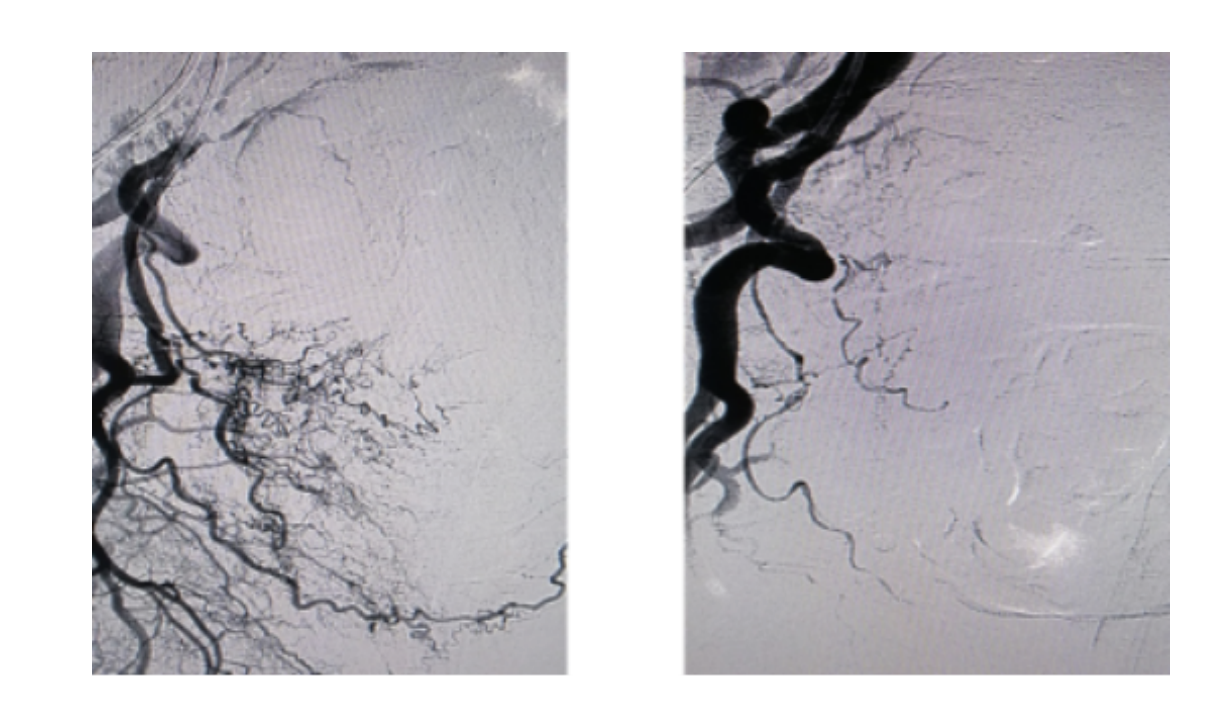
Advantages of endovascular surgery:
- -1. Less traumatic — performed without incisions.
- -2. Performed without general anesthesia.
- -3. Hospital stay no longer than one day.
Endovascular surgery in urology
1. Embolization of testicular veins for varicocele:
Varicocele is varicose veins (pampiniform plexus) around the testicle and along the spermatic cord. It most often develops on the left side, as the left spermatic vein is primarily the source of increased pressure in the pampiniform plexus veins, causing the plexus to stretch and fill with venous blood. The anatomical features of the left spermatic vein are such that its valve apparatus most often cannot withstand the blood pressure from the left renal vein (into which the left spermatic vein drains), and blood, passing through the valve, flows along the left spermatic vein into the pampiniform plexus of the left testicle.
Varicocele is a fairly common disease and is diagnosed in 10–12% of all men. It is believed that the main cause of varicocele development is a genetic predisposition to "weakness" of the venous valve apparatus, as a result of which the valve of the left spermatic vein does not perform its function and allows blood to flow in the reverse direction toward the testicle.
All methods of treating varicocele are aimed at stopping the pathological flow of venous blood through the left spermatic vein into the pampiniform plexus of the scrotum. Such methods can be both surgical and endovascular.
Testicular vein embolization involves stopping blood flow through the vein by placing a special coil (or occluder) into the vein and injecting a sclerosant. This procedure is performed endovascularly (intravascularly), without incisions or general anesthesia, under local anesthesia. A puncture is made in the femoral vein in the leg or any large vein in the arm; through this puncture, under X-ray guidance, a special tube (catheter) is inserted into the spermatic (testicular) vein, through which the coil and sclerosant are introduced. Already 20 minutes after embolization, the patient can get up and move around, and can also be discharged from the hospital the same day.
Varicocele is varicose veins (pampiniform plexus) around the testicle and along the spermatic cord. It most often develops on the left side, as the left spermatic vein is primarily the source of increased pressure in the pampiniform plexus veins, causing the plexus to stretch and fill with venous blood. The anatomical features of the left spermatic vein are such that its valve apparatus most often cannot withstand the blood pressure from the left renal vein (into which the left spermatic vein drains), and blood, passing through the valve, flows along the left spermatic vein into the pampiniform plexus of the left testicle.
Varicocele is a fairly common disease and is diagnosed in 10–12% of all men. It is believed that the main cause of varicocele development is a genetic predisposition to "weakness" of the venous valve apparatus, as a result of which the valve of the left spermatic vein does not perform its function and allows blood to flow in the reverse direction toward the testicle.
All methods of treating varicocele are aimed at stopping the pathological flow of venous blood through the left spermatic vein into the pampiniform plexus of the scrotum. Such methods can be both surgical and endovascular.
Testicular vein embolization involves stopping blood flow through the vein by placing a special coil (or occluder) into the vein and injecting a sclerosant. This procedure is performed endovascularly (intravascularly), without incisions or general anesthesia, under local anesthesia. A puncture is made in the femoral vein in the leg or any large vein in the arm; through this puncture, under X-ray guidance, a special tube (catheter) is inserted into the spermatic (testicular) vein, through which the coil and sclerosant are introduced. Already 20 minutes after embolization, the patient can get up and move around, and can also be discharged from the hospital the same day.
2. Embolization of prostatic arteries for benign prostatic hyperplasia (BPH)
Prostate adenoma (Benign prostatic hyperplasia) is the overgrowth of prostate tissue, in which nodules form in the prostate and gradually grow. Since the prostate gland surrounds part of the urethra, as the nodules grow, the prostate compresses it, and urination becomes difficult.
The cause of prostate adenoma development is hormonal changes occurring in a man's body with age: a decrease in male sex hormone levels (testosterone) with a simultaneous increase in female sex hormones (estrogens). The risk of developing prostate adenoma increases after 40–50 years of age. In young men, this disease occurs extremely rarely.
There are a large number of methods for treating prostate adenoma. Their choice depends on the stage of the process and the patient's comorbidities.
In certain cases, a technique called prostatic artery embolization (PAE) is used to treat prostate adenoma. The essence of PAE is to stop blood flow through the branches of the prostatic arteries that supply prostate tissue. After introducing special embolization particles into these vessels, the adenoma loses its blood supply and is replaced by connective tissue — fibrosis — which leads to a reduction in prostate size and improvement in urination.
Since prostatic artery embolization (PAE) is performed without incisions, without general anesthesia, under local anesthesia, this technique is indicated primarily for patients whose comorbidities and severity of condition do not allow surgical treatment.
Prostate adenoma (Benign prostatic hyperplasia) is the overgrowth of prostate tissue, in which nodules form in the prostate and gradually grow. Since the prostate gland surrounds part of the urethra, as the nodules grow, the prostate compresses it, and urination becomes difficult.
The cause of prostate adenoma development is hormonal changes occurring in a man's body with age: a decrease in male sex hormone levels (testosterone) with a simultaneous increase in female sex hormones (estrogens). The risk of developing prostate adenoma increases after 40–50 years of age. In young men, this disease occurs extremely rarely.
There are a large number of methods for treating prostate adenoma. Their choice depends on the stage of the process and the patient's comorbidities.
In certain cases, a technique called prostatic artery embolization (PAE) is used to treat prostate adenoma. The essence of PAE is to stop blood flow through the branches of the prostatic arteries that supply prostate tissue. After introducing special embolization particles into these vessels, the adenoma loses its blood supply and is replaced by connective tissue — fibrosis — which leads to a reduction in prostate size and improvement in urination.
Since prostatic artery embolization (PAE) is performed without incisions, without general anesthesia, under local anesthesia, this technique is indicated primarily for patients whose comorbidities and severity of condition do not allow surgical treatment.
3. Embolization to stop bleeding in urological practice:
Sometimes urological diseases can be complicated by a life-threatening condition such as bleeding.
For this category of patients, a highly effective technique for stopping bleeding is embolization (blood flow occlusion). A thin tube (catheter) is inserted into the artery supplying the bleeding zone, through which small particles (emboli) are introduced, blocking blood flow and stopping the bleeding. This procedure is performed under local anesthesia, without incisions, and allows rapid results to be achieved in severely ill, weakened patients.
Sometimes urological diseases can be complicated by a life-threatening condition such as bleeding.
For this category of patients, a highly effective technique for stopping bleeding is embolization (blood flow occlusion). A thin tube (catheter) is inserted into the artery supplying the bleeding zone, through which small particles (emboli) are introduced, blocking blood flow and stopping the bleeding. This procedure is performed under local anesthesia, without incisions, and allows rapid results to be achieved in severely ill, weakened patients.
- ✓Today, our Urology Centre is the only place where all types of care are provided for patients with urological conditions.
- ✓For all questions regarding endovascular treatment methods in urology, you can consult by phone: +38-050-353-70-59